 Palmeiras Hub
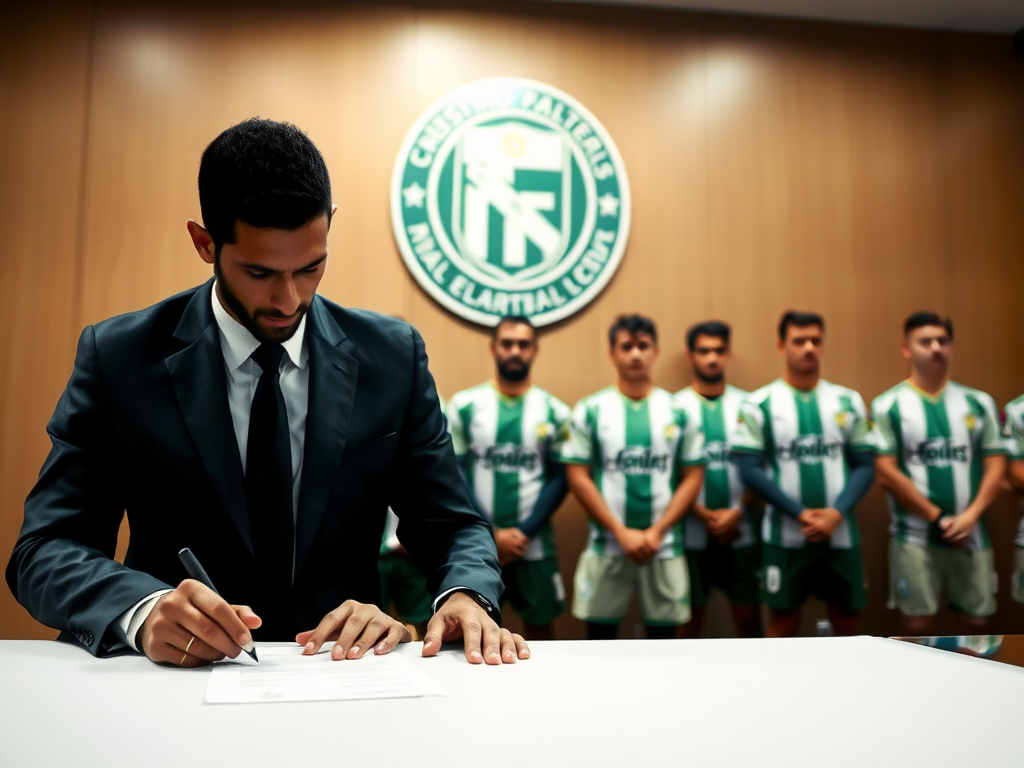
The Palmeiras Academy of Football might be on the verge of witnessing its most significant transaction yet. An astronomical offer of R$300 million for Danilo, the engine of the Palmeiras midfield, has set the news ablaze and placed the club before a monumental dilemma. The potential departure of one of its most polished gems represents not only a historic financial landmark but also a watershed moment in the club's sporting ambitions.
The figure of R$300 million is, in itself, a record for Brazilian football and certainly for Palmeiras. Translating this into European currencies, we are talking about something in the range of 55 to 60 million euros – a valuation that places Danilo among the most valuable defensive midfielders on the planet. This amount reflects not only the recognition of the number 28's talent but also the growing appreciation of Brazilian players on the international stage, especially those who have already proven their worth in high-level competitions like the Copa Libertadores. The source of the bid, though not explicitly stated, points to a European football giant, likely from the Premier League, seeking to strengthen its midfield with a player boasting a rare combination of physical vigor, tactical intelligence, and technical quality in ball distribution. For the Verdão's board, managed with prudence and a focus on financial health, this is an offer that becomes almost irresistible, capable of injecting an unprecedented volume of resources into the club's coffers.
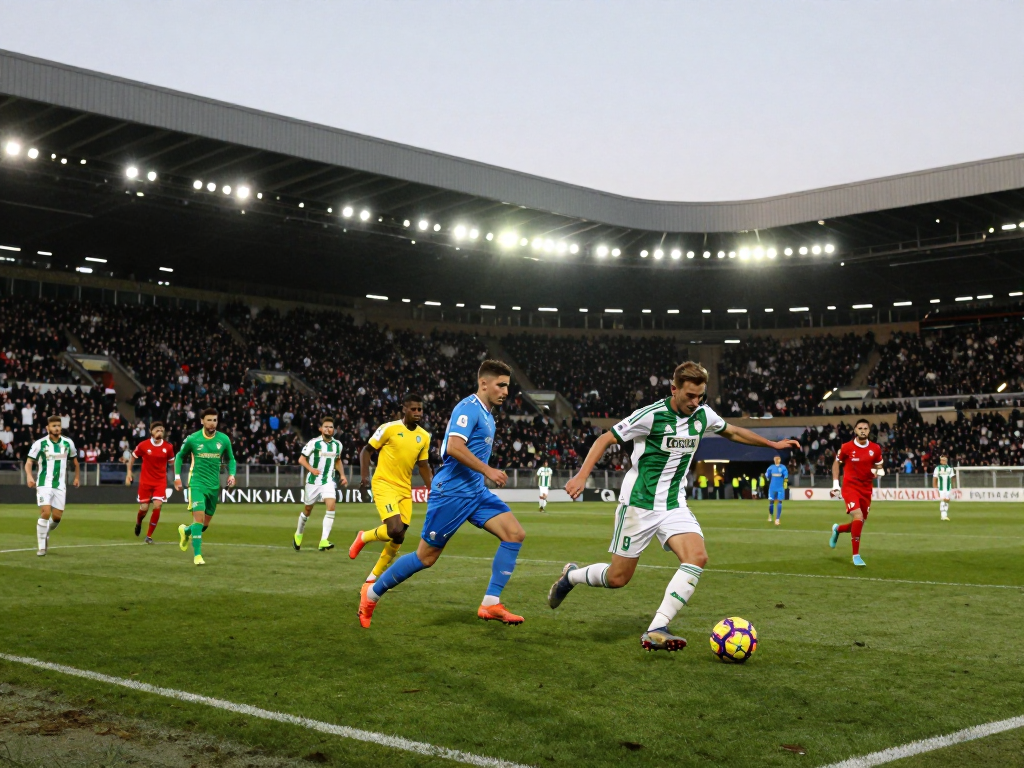
Danilo dos Santos de Oliveira, the "Cria da Academia" (Academy Graduate) who conquered South America and Brazil, has transcended the mere role of a defensive midfielder. He is the true "guard dog" and the first builder of Palmeiras' play. His impeccable tactical reading, capacity for disarms and interceptions, coupled with clean transitions and precise passes, have made him an irreplaceable piece in Abel Ferreira's tactical scheme. Since his meteoric rise, Danilo has been fundamental in the two Libertadores triumphs, recent Brasileirão titles, and Copa do Brasil campaigns. His presence on the field offers balance, protecting the defense and initiating attacking plays with vertical passes that break opposing lines. More than just a player, he embodies the winning DNA of Abel's Palmeiras: intensity, intelligence, and resilience. Losing a player with such impact, at the peak of his form and only 22 years old, is a tough blow for any team, especially one that aims for sustained high performance on all fronts.
Danilo's departure would create an immense void in the heart of Palmeiras' midfield. Abel Ferreira, a master at reinventing and adapting his team, would face one of his greatest challenges. The number 28 is the link between defense and attack, the pillar that allows the freedom of midfielders and and attackers. Without him, the structure of compaction and the agility in transition would be tested to the extreme. Internally, Palmeiras counts on young talents like Fabinho and Luis Guilherme who, though promising, do not yet possess Danilo's mileage and experience in decisive matches. Gabriel Menino and Jailson are more experienced options, but with different characteristics, requiring a reconfiguration of the sector. Market replacement would be complex. Finding a defensive midfielder with the same versatility, marking ability, and quality in ball distribution, adapted to Abel's playing style and with the "stature" to wear the Palmeiras shirt in a club of such prominence, would be an arduous and very expensive task. The board would have to act with surgical precision to avoid unbalancing such a victorious squad.
Leila Pereira's management, guided by fiscal responsibility, has a history of capitalizing on "Crias da Academia" at opportune moments. The sales of Gabriel Jesus, Endrick (future), and other talents have solidified Palmeiras' financial health. A negotiation like Danilo's, for R$300 million, would represent not just a financial relief, but a capital injection that would allow the club even more robust long-term planning. This value could be reinvested in infrastructure, debt repayment, or, more likely, in the acquisition of specific, high-level reinforcements to maintain competitiveness. Palmeiras' strategy has been to develop, win, and when the market offers irresistible figures, sell to reinvest and perpetuate the winning cycle. The challenge is to balance the equation: how much is one more title worth compared to a transaction that could secure the club's stability for years?
The news dropped like a bomb on the Palmeiras fanbase, generating a mix of pride and apprehension. On one hand, there is recognition for the academy's work and pride in seeing a player developed at the club reach such high levels. On the other, the pain of the imminent loss of an idol, a player who embodies the team's grit and technique. Social media is buzzing with heated debates: "Sell him immediately!" some shout, thinking about financial health. "Don't sell him at all!" others retort, focusing on the pursuit of more titles. And amidst this storm of emotions, the booming voice of Neto, the always controversial presenter, could not remain silent. Known for his strong opinions and not mincing words, Neto surely reacted with his characteristic intensity. It's likely he extolled the "absurdity" of the offer, classifying it as irresistible and praising Palmeiras' management for such an achievement. However, it wouldn't be surprising if, in his fiery style, he also criticized the loss of such a fundamental pillar, questioning how Abel Ferreira's team could maintain the same level without its midfield engine. Phrases like "It's time to sell and celebrate!" would probably intertwine with "Now Palmeiras will feel his absence!" in his passionate discourse, reflecting the dichotomy hanging over Allianz Parque. Neto's analysis, however controversial, serves as a barometer for the grandeur of the deal and its repercussions in the national football scene.
The decision regarding Danilo's future transcends the simple negotiation of an athlete; it is a turning point for Palmeiras. Amidst a season of challenges and the relentless pursuit of more glory, the Verdão's board must weigh an unprecedented financial opportunity against the immediate sporting impact. Keeping Danilo means preserving the backbone of a champion team, but refusing the offer means foregoing capital that could propel the club to another level. Whatever the choice, it will echo for years, shaping Palmeiras' trajectory on the field and in its balance sheets. The divided fanbase anxiously awaits the verdict that will define not only Danilo's future but also the direction of the Academy of Football in the coming cycles.